
Reverse-Curve Gutter Guards in Springfield, OH
Reverse-curve gutter guards in Springfield, OH: solid covers that use surface tension to pull rain into the gutter while leaves fall away.
Call +1 (844) 468-2611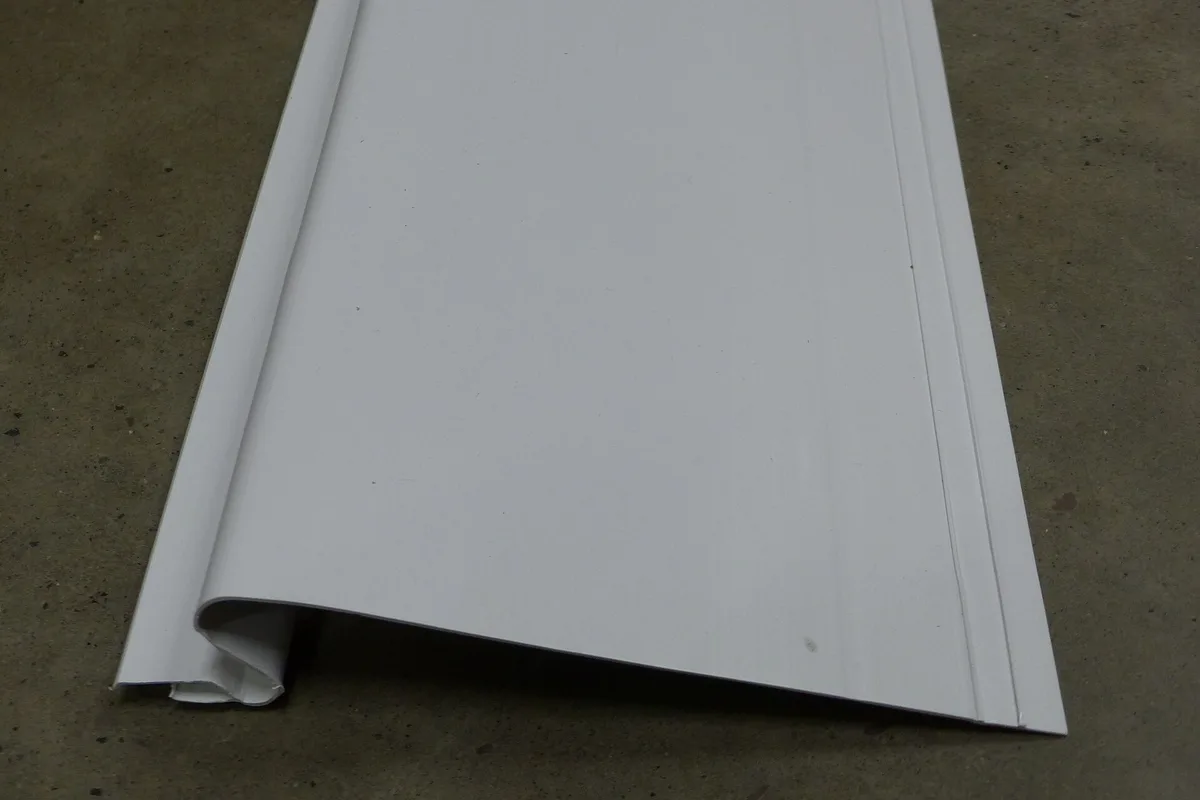
A reverse-curve guard is a solid cover with a rounded nose. Rain sheets down the roof, follows the curve of the cover by surface tension, and drops through a narrow slot into the gutter. Leaves, twigs and seeds cannot make the turn, so they fall off the edge to the ground. It is the oldest engineered guard design, and on the right roof it is close to maintenance-free.
The right roof is the condition. Reverse-curve systems love steep pitches and big whole-leaf drop: the water has the speed to follow the curve, and the leaves are too large to do anything but fall. Springfield's older two-story homes in Ridgewood and along East High Street, with tall rooflines under mature oaks, are the natural candidates.
The same physics sets the limits. In a cloudburst, water moving fast over a steep roof can overshoot the slot, and on a low-pitch roof it may not carry enough momentum to follow the curve at all. Small debris like roof grit mostly washes over, but fine seeds can ride the water film into the slot. The professional weighs pitch, roof material and canopy before recommending this style, and says so plainly when a different guard fits better.
Installation is more involved than a drop-in panel: the cover mounts under the shingle edge or to the fascia depending on the system, and the slot alignment has to be consistent along the whole run. Corners and valleys need purpose-made miters, which is why this style is quoted after a measure rather than off a per-foot guess.
Signs a Reverse-Curve Cover Fits Your House
- Your roof is steep and sheds water fast
- The debris problem is big leaves, not seeds or needles
- You want the closest thing to a fit-and-forget cover
- Your gutters overflow at the front edge in heavy rain now
- The roofline is tall, and ladder work is out of the question
Alignment Is Everything
A reverse-curve cover works only when the slot sits at the right distance from the roof plane along the entire run. Wavy fascia or a sagging gutter breaks that geometry, so gutter straightening or replacement sometimes comes first. The quote will say so if your roofline needs it, with the reason shown to you on the ladder, not just on paper.
In Springfield, reverse-curve gutter guard work has to account for the local housing stock: century-old foursquares and colonials with long gutter runs, post-war ranches with shallow pitches, and mature oak and maple canopy across neighborhoods like Northridge, Ridgewood and Snyder Park. The professional who takes your call works these streets and sizes the job to the house in front of them, not to a catalog page.
How the Work Runs
- 1
Measure runs and check pitch, fascia line and gutter level
- 2
Clean gutters and straighten or replace any sagging sections
- 3
Fit covers and valley miters, aligning the slot to the roof plane
- 4
Fasten the system and seal corners and end caps
- 5
Hose-test at roof level, including a hard run at the valleys
On the visit, the professional walks the full roofline with you: gutter size and condition, fascia soundness at the corners, downspout count and placement, and where valleys concentrate water. Anything that would change the reverse-curve gutter guard quote is pointed out on the spot, not discovered halfway through the job.
You get a written quote that names the materials, the footage and the work, with the price held as quoted. If the right answer for your house is a smaller job than the one you called about, that is the recommendation you will hear.
What Reverse-Curve Guards Cost in Springfield
Reverse-curve systems price in the upper-middle range: the covers cost more than perforated panels and the fitting is more exacting. Footage, height, pitch and corner count set the total. The written quote after the measure itemizes covers, miters and labor.
Keeping a Reverse-Curve System Working
There is no surface to brush and no mesh to rinse. The standing checks are the slot line after any roof work, and downspout flow once a year. If the roof is ever replaced, tell the roofer the covers are there so they are refitted, not discarded.
Reverse-Curve Gutter Guards Questions
Do reverse-curve guards overshoot in heavy rain?
They can on very steep roofs in cloudburst conditions, which is why pitch is checked first and why the hose test runs hard at the end of the install. Where overshoot risk is real, another guard style is the honest recommendation.
Will a reverse-curve cover work with a metal roof?
Some systems are rated for metal roofs and some are not; the water film behaves differently on metal. The professional confirms compatibility for your roof material before quoting.
Do these covers keep out birds and wasps?
The slot is narrow and the cover is solid, so nesting access is far harder than with an open gutter. End caps are sealed at install for the same reason.
Related Gutter Services
- Micro-Mesh Gutter Guards
- Perforated Aluminum Gutter Guards
- Seamless Gutter Installation
- Gutter Cleaning
Ready to talk through reverse-curve gutter guard for your Springfield home? Call +1 (844) 468-2611 and speak directly with a local gutter professional. For how runoff behaves once it leaves your downspouts, see also the EPA's Soak Up the Rain guidance.
Talk to a Springfield Gutter Professional
Describe your roofline and your trees and get clear next steps, with any quote in writing after a measure.